Stinging insect pressure in West Michigan spikes sharply between late June and October as reproductive queens expand mature colonies into wall voids, soffits, and dense landscape canopies. In older architectural…
Stinging insect pressure in West Michigan spikes sharply between late June and October as reproductive queens expand mature colonies into wall voids, soffits, and dense landscape canopies. In older architectural properties throughout Heritage Hill, Midtown, and East Hills, open soffit vents and aged mortar joints invite European hornets and yellowjackets into wall cavities, creating structural scratching noises and venomous puncture risks inside living areas. In mid-century roof profiles in Alger Heights, Creston, and Fulton Heights, paper wasps establish expansive comb networks along fascia boards and deck joists. Subterranean species frequently colonize abandoned rodent burrows near wooded lots and parklands bordering Westside Connection, Belknap Lookout, and Garfield Park, posing severe puncture hazards during routine lawn care.
Over-the-counter pressurized sprays from regional retail outlets often push defensive workers deeper into wall cavities or disperse them into adjacent interior rooms, intensifying the stinging hazard without neutralizing the fertile queen. Professional stinging insect removal deploys targeted integrated pest management (IPM) protocols rather than indiscriminate perimeter spraying. Technicians utilize micro-injected insecticidal dusts containing pyrethroids or desiccating silicas directly into the nesting entrance. This process forces foraging workers to track the active ingredient into the brood chamber, neutralizing the entire biological hierarchy within 24 to 48 hours.
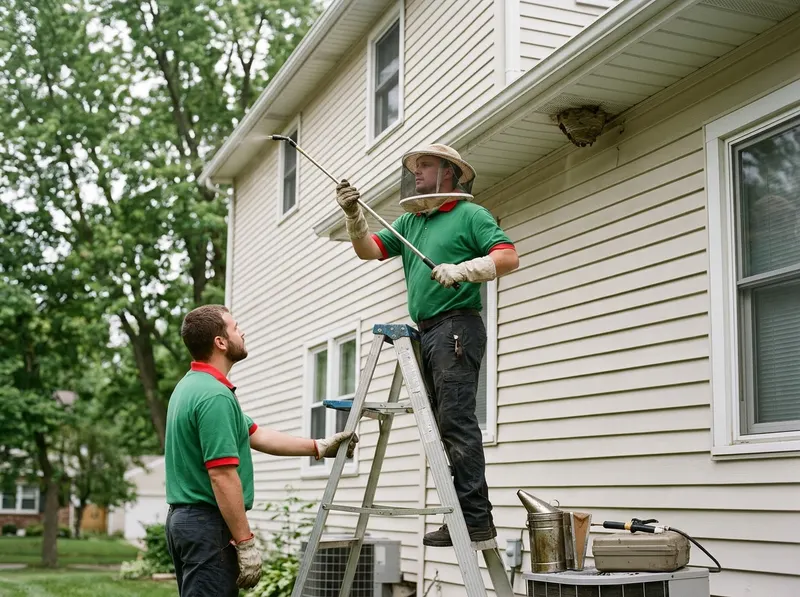
Structural considerations dictate the mechanical removal protocol. Exposed aerial nests, such as football-sized baldfaced hornet nests hung in crabapple trees or under porch eaves, are treated and mechanically detached in a sealed poly-bag during a single visit. Concealed wall-void colonies require specialized void injection followed by entry-point sealing once worker activity ceases completely. Sealing entry points prior to colony mortality forces agitated wasps into finished interior spaces through drywall seams or recessed electrical fixtures, which professional treatment schedules strictly prevent.
Every job gets a firm, written price after a free on-site visit.
Tell us about your stinging insect removal job in Grand Rapids and we'll send a clear, written quote, usually the same day.
 Iverna Pest Pros