Rodent exclusion resolves active infestations by eliminating structural vulnerability rather than relying on recurring pesticide treatments. House mice (*Mus musculus*) require an aperture of only 0.25 inches (the…
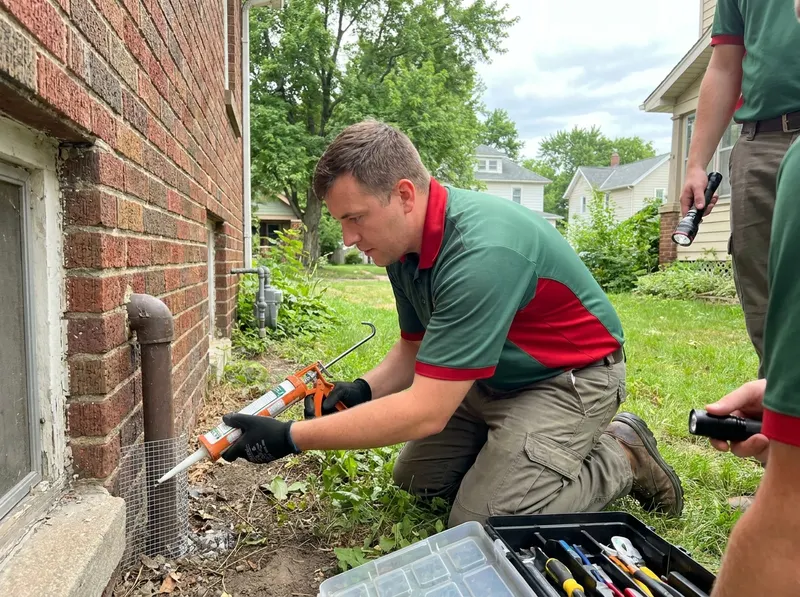
Rodent exclusion resolves active infestations by eliminating structural vulnerability rather than relying on recurring pesticide treatments. House mice (*Mus musculus*) require an aperture of only 0.25 inches (the width of a standard pencil) to penetrate building envelopes, while Norway rats (*Rattus norvegicus*) enter through openings of 0.5 inches. In historic Kent County framing, prevalent throughout Heritage Hill, Midtown, and East Hills, fieldstone foundations, settling sill plates, and aging floor joists frequently develop gaps where exterior masonry interfaces with wood structural timbers. Rodent exclusion replaces the temporary strategy of chemical broadcast baiting with physical building envelope hardening, stopping interior biological contamination of living spaces and food storage areas.
Technicians deploy specialized hardware cloth across open crawlspace vents, seal HVAC pipe chases, and install heavy-gauge galvanized flashing beneath low-lying wood fascia boards and corner posts. In neighborhoods like Belknap Lookout, Creston, and Westside Connection, post-war brick and block foundations often show settlement cracks around basement window wells, dryer vents, and chimney flashings. During West Michigan's autumn temperature drops in October and November, rodents migrate toward heated residential structures. Installing galvanized steel barriers and elastomeric masonry patches stops ingress permanently without introducing toxic lingering rodenticides into living quarters.
Single-family residences near parkland borders such as Garfield Park, Fulton Heights, and Alger Heights experience elevated rodent pressure from open greenspaces. Decision guidance relies on the integrity of the building exterior: if exterior gaps are visible along utility conduits or ground-level garage door weather stripping, temporary snap traps inside living areas only remove current individuals while replacement rodents enter within 48 to 72 hours. Complete structural exclusion addresses both the active interior population through targeted trapping and seals the perimeter envelope to secure long-term protection.
Every job gets a firm, written price after a free on-site visit.
Tell us about your mice and rat rodent exclusion job in Grand Rapids and we'll send a clear, written quote, usually the same day.
 Iverna Pest Pros