Flea extermination addresses severe biological disruptions inside residential spaces where over-the-counter foggers and store-bought pyrethrin sprays fail. In older architectural properties throughout Heritage Hill and…
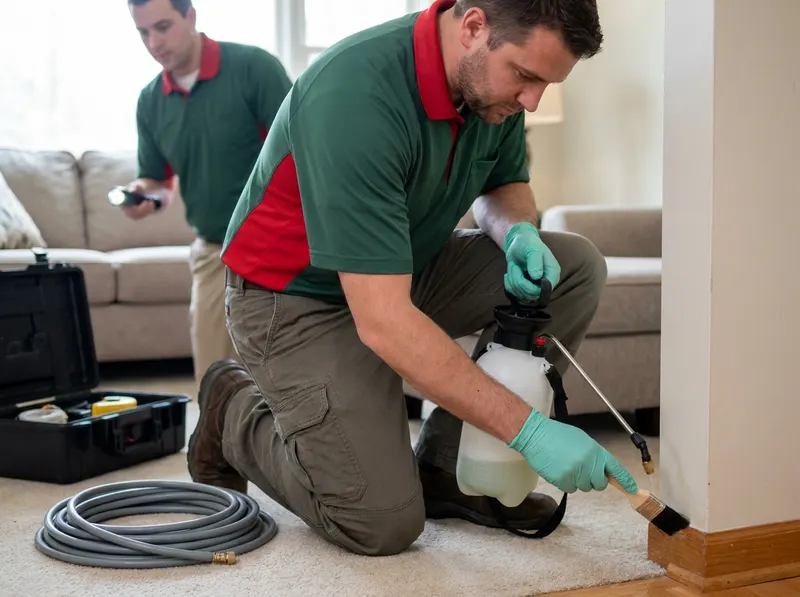
Flea extermination addresses severe biological disruptions inside residential spaces where over-the-counter foggers and store-bought pyrethrin sprays fail. In older architectural properties throughout Heritage Hill and Eastown, original tongue-and-groove hardwood floors contain narrow expansion seams where flea larvae consume organic debris and pupate inside protective silken cocoons. Modern aerosol cans bought at home improvement retail stores lack the insect growth regulators necessary to stop juvenile development, allowing newly formed adults to emerge continuously over several weeks. Direct intervention relies on non-repellent formulations and synthetic juvenile hormone analogues that penetrate carpet fibers down to the backing, halting egg viability without exposing household members to heavy airborne pesticide drift.
Technicians assess the distinct structural configurations of Grand Rapids residences, adjusting treatment boundaries based on pet movement and building foundation types. In neighborhoods like Creston, Belknap Lookout, and Westside Connection, raised foundations and Michigan basements frequently trap moisture, creating microclimates where flea pupae can survive dormant for up to 150 days in the absence of heat or vibration. Outdoor animal vectors along the Grand River promenade and urban parks often transport fleas to residential perimeters, making barrier inspections essential. Inside homes in Alger Heights and Midtown, technicians inspect subflooring, baseboard crevices, pet bedding areas, and structural transitions to apply measured active ingredients precisely where adult biting populations congregate.
A single female flea deposits up to 50 eggs per day, meaning thousands of developing eggs fall directly into rugs and furniture cushions within 72 hours of an initial introduction. Flea extermination requires structured trade-offs: aerosol bombs disperse surface residues broadly onto food counters and tables while missing carpet roots, whereas professional direct-injection applications require strict 3-to-4-hour vacancy periods followed by mandatory daily vacuuming to vibrate remaining pupae out of their silk shells. If a home contains unsealed dirt crawl spaces or unwashed pet bedding, the treatment protocol must expand to include those zones; otherwise, adult emergence cycles resume. Exact costs are confirmed following an on-site structural assessment of the property.
Every job gets a firm, written price after a free on-site visit.
Tell us about your flea extermination job in Grand Rapids and we'll send a clear, written quote, usually the same day.
 Iverna Pest Pros