Carpenter ants do not ingest cellulose like subterranean termites; instead, they hollow out smooth galleries along the grain of sound or moisture-compromised lumber to create brood nests. In older Grand Rapids housing…
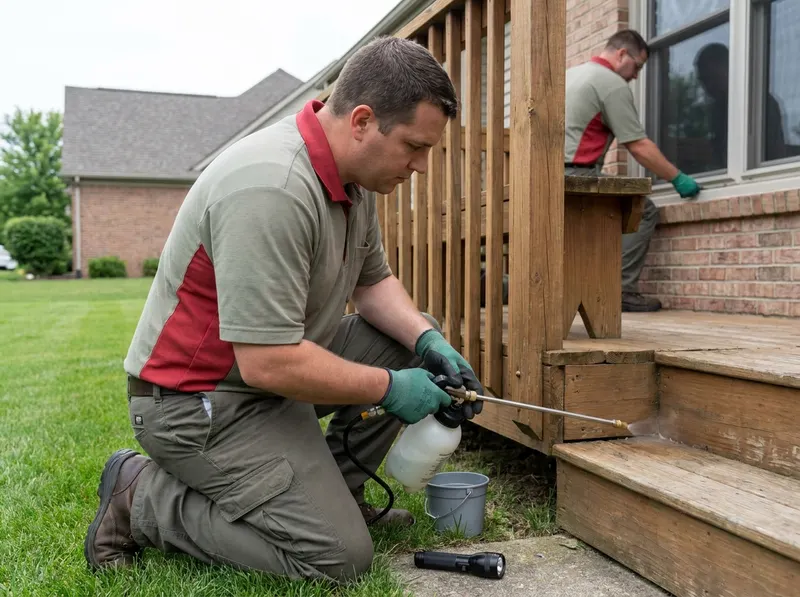
Carpenter ants do not ingest cellulose like subterranean termites; instead, they hollow out smooth galleries along the grain of sound or moisture-compromised lumber to create brood nests. In older Grand Rapids housing stock, particularly the historic frame residences of Heritage Hill, East Hills, and Midtown, balloon-framed exterior walls and stone-sill foundations provide ideal entry paths where plumbing moisture or gutter leaks soften structural members. Modern homes along Westside Connection or wooded parcels near Millennium Park face satellite colonies migrating indoors along overhanging maple, oak, and pine branches. Off-the-shelf pyrethroid sprays from retail hardware stores provide immediate contact mortality for foraging workers, but that repellent action triggers a colony defense known as budding, causing the queen to split her reproductive chambers into additional wall voids. Professional integrated pest management applies non-repellent microencapsulated formulations or fipronil transfer agents; foraging workers cross the treated zone unnoticed, groom themselves, and passively spread the lethal dose deep into the hidden parent nest within 72 hours.
The initial diagnostic phase separates active nesting sites from standard outdoor foraging routes. Inspection protocols focus on high-risk condensation zones, including bathroom subfloors, kitchen dishwasher recesses, roof flashing junctions near chimney saddles, and window headers. Frass, fine wood shavings mixed with insect body parts dropped from nesting galleries, is mapped to pinpoint exact wall studs requiring micro-injection rather than generalized broadcast spraying. In neighborhood settings such as Creston and Alger Heights, where mature tree canopies overhang rooflines, exterior management includes trimming back physical contact points and securing a foundational barrier 3 feet up the exterior masonry and 3 feet out onto adjacent soil. This approach minimizes indoor pesticide volume while maintaining family and pet safety across living and sleeping quarters.
Structural repair and remediation work must run parallel to biological eradication. When carpenter ant activity targets sill plates above wet basements or moisture-damaged subflooring in older Eastown or Garfield Park basements, the structural timber must be allowed to dry below 15% moisture content following treatment to prevent secondary colony re-establishment. If an infestation is localized to an exterior porch column or single window frame, a focused void injection combined with an exterior barrier resolves the satellite colony at the minimum entry price point. When foraging networks extend through insulated attic trusses, spray foam cavities, or layered floor joists, a dual-phase system using bait matrices and slow-acting non-repellents ensures thorough elimination without invasive wall demolition.
Every job gets a firm, written price after a free on-site visit.
Tell us about your carpenter ant treatment job in Grand Rapids and we'll send a clear, written quote, usually the same day.
 Iverna Pest Pros