Seasonal exterior perimeter barriers protect residential structures by neutralizing invasive insects and rodents before they enter structural framing or living quarters. Over-the-counter surface sprays from big-box…
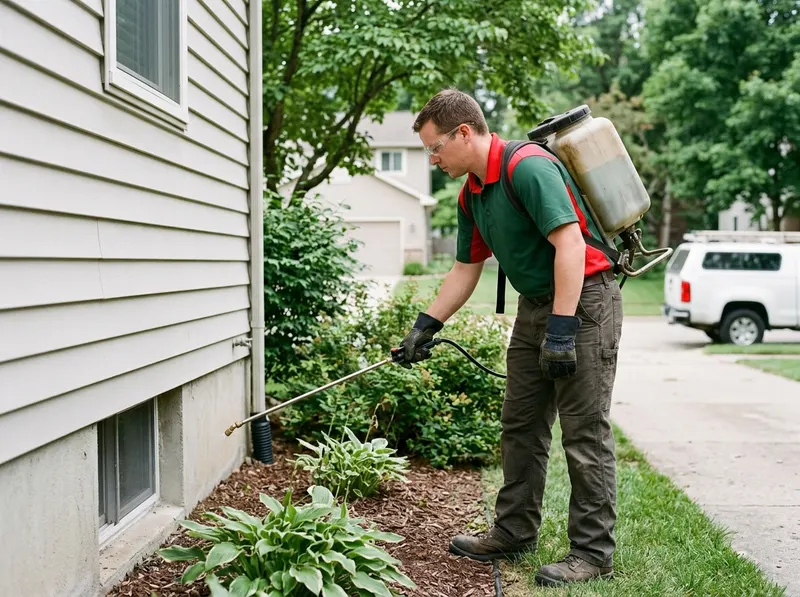
Seasonal exterior perimeter barriers protect residential structures by neutralizing invasive insects and rodents before they enter structural framing or living quarters. Over-the-counter surface sprays from big-box stores break down quickly under West Michigan rainfall and direct sunlight, leaving homes vulnerable within days. A targeted exterior perimeter treatment applies specialized micro-encapsulated formulations that bond to stone, poured concrete, and split-faced block. This exterior application prevents indoor biological contamination and saves homeowners the stress of discovering insects inside kitchen cabinets or bedroom baseboards. In older architectural properties, such as 19th-century Queen Anne and Italianate foundations in Heritage Hill and Midtown, deep mortar joints and settling rubble walls create direct highways for pavement ants and overwintering pests. Applying a continuous perimeter barrier around these irregular surfaces blocks access points without exposing household air systems to indoor chemical treatments.
Property age and landscape moisture dictate the required application approach across Grand Rapids neighborhoods. Homes situated on the sloping clay soils of Belknap Lookout and Creston, or properties nestled near the mature tree canopies of Eastown, East Hills, and Fulton Heights, face elevated pest pressure from moisture-seeking carpenter ants and seasonal boxelder migrations. A standard seasonal barrier fits residential homes experiencing perimeter trailing and fall insect clustering. However, if pests have already established interior nesting cavities inside wall voids, a surface perimeter barrier alone cannot resolve the infestation; internal injection and mechanical exclusion must accompany the exterior line. The functional trade-off centers on coverage durability versus application timing: exterior perimeter barriers require stable weather during application to set properly, but they eliminate the need to vacate living quarters during service.
In established, leafy communities like Alger Heights, Garfield Park, and Westside Connection, autumn temperatures prompt rapid rodent ingress and cluster insect aggregation along sun-warmed siding. Technicians measure the foundation footprint and identify micro-habitats, including landscape timbers, ground-level window wells, and downspout splash blocks. Step one involves clearing immediate debris from the foundation skirt to ensure uninterrupted material contact. Step two delivers a calibrated liquid application extending 3 feet up the vertical foundation wall and 3 feet outward onto the soil boundary. Step three places water-resistant granular treatments into mulch beds, patio seams, and deck pilings to intercept subterranean burrowers. Step four seals accessible utility penetrations smaller than a pencil with chew-proof copper mesh, establishing a durable line of defense against structural and biological threats.
Every job gets a firm, written price after a free on-site visit.
Tell us about your seasonal exterior perimeter barriers job in Grand Rapids and we'll send a clear, written quote, usually the same day.
 Iverna Pest Pros